
Nutrition advice for PCOS is everywhere, and most of it is vague. “Eat clean.” “Cut carbs.” “Avoid inflammatory foods.” Useful only if you already know what that means in practice and how to implement it.
What is a Low Glycemic Index, Low Glycemic Load Diet for PCOS?
The low GI diet for PCOS has more clinical evidence behind it than almost any other dietary pattern. Here’s the actual rationale, and what it looks like as a real eating plan.
Why Glycemic Index Matters in PCOS
The glycemic index measures how quickly a carbohydrate-containing food raises blood glucose compared to a reference food (typically pure glucose). High-GI foods cause rapid, sharp rises in blood sugar. Low-GI foods produce slower, more sustained glucose elevation. For women with PCOS, this distinction is clinically significant for one central reason: insulin resistance.
Between 50 and 80% of women with PCOS, lean and overweight alike, have some degree of insulin resistance. When cells are resistant to insulin’s signalling, the pancreas compensates by producing more insulin. Chronically elevated insulin then:
- Stimulates the ovaries to produce excess androgens (testosterone)
- Suppresses sex hormone-binding globulin (SHBG), which increases free androgen activity
- Promotes visceral (belly) fat storage and suppresses fat breakdown
- Disrupts the LH/FSH ratio required for regular ovulation
- Increases inflammation which worsens insulin resistance
Reducing postprandial glucose spikes, which is what a low-GI diet does mechanistically, is one of the most direct dietary tools available for managing insulin levels and their downstream hormonal effects.
A well-designed meta-analysis published in Human Reproduction Update (Marsh & Brand-Miller, 2005), along with subsequent RCTs, found that a low-GI diet significantly improved insulin sensitivity, menstrual regularity, and quality of life in women with PCOS compared to conventional healthy eating advice.
Glycemic Index vs. Glycemic Load: The Distinction That Matters
Glycemic index measures the quality of a carbohydrate. Glycemic load (GL) accounts for both quality and quantity; it’s a more clinically useful metric because it reflects what actually happens to blood glucose after you eat a typical serving.
For example:
Watermelon has a high GI (~72) but a low GL per serving because a typical portion contains relatively little carbohydrate
White rice has a high GI and a high GL because both quality and quantity drive a significant glucose response.
In practice: eat low-GI foods in reasonable portions. The GI of a food matters, but so does how much of it you eat.
Low-GI Foods to Prioritize
Non-starchy vegetables
Virtually all of these have a low GI and are the foundation of any PCOS-friendly diet:
- Leafy greens, broccoli, cauliflower, zucchini, peppers, cucumber, asparagus, green beans, Brussels sprouts, tomatoes, mushrooms
- Legumes are among the most valuable foods for PCOS given their low GI, high fibre, and protein content: Lentils (GI ~29), black beans (GI ~30), kidney beans (GI ~29)
- Most whole fruits, not fruit juice: Berries (GI 25–40), apples (GI ~36), pears (GI ~38), plums (GI ~40), cherries (GI ~22). Higher-GI fruits like ripe bananas and watermelon are fine in small portions or on occasion.
- Proteins have minimal direct GI effect: Eggs, poultry, fish, Greek yogurt, cottage cheese
- Healthy fats similarly have negligible glycemic effect and slow gastric emptying, blunting the glucose response of other foods: Extra virgin olive oil, avocado, nuts (almonds, walnuts, pistachios), seeds (chia, flax, pumpkin)
High-GI Foods to Avoid or Minimize
- Refined grains and processed grain products: White, multigrain or brown bread, white or brown rice, most commercial breakfast cereals, crackers, standard pasta, baked goods
- Added sugars and sweetened beverages: Sugar-sweetened drinks, fruit juice, energy drinks, most flavoured yogurts
- Ultra-processed foods: The combination of refined starch, added sugar, and industrially modified fats creates products with high GI and high glycemic load, poor satiety, and pro-inflammatory potential
- High-sugar snack foods: Candy, most granola bars, commercial baked goods, chips (moderate-to-high GI with high caloric density)
- Certain starches: Oats/Oatmeal, baked potato (GI ~85), rice cakes
How to Actually Lower the GI of What You Eat
GI is not fixed; it’s modifiable by preparation and combination:
- Cooking method: Al dente pasta has a lower GI than fully cooked. Cooling and reheating starches increases resistant starch content, lowering GI. The Glycemic Load of these foods may still be problematic, though.
- Fibre: Adding fibre to a meal slows glucose absorption. This is why whole fruit has a lower GI than juice, and why a meal with plenty of vegetables has a lower net glycaemic impact.
- Protein and fat: Including protein and fat in a meal reduces the glucose response to the carbohydrates consumed in that meal. This is the physiological basis for eating eggs with toast rather than toast alone.
- Acid: Vinegar (as salad dressing, for example) and fermented foods reduce postprandial glucose. Even a tablespoon of apple cider vinegar in water before a meal has been shown in small RCTs to modestly reduce postprandial glucose – not magic, but a real and simple tool.
- Ripeness: Riper fruit has higher sugar content and higher GI. A slightly underripe banana has significantly less available glucose than a very ripe one.
Will any of these measures help if you are consuming too many carbs? Minimally. The best strategy is a low-carb, low-glycemic load, and low GI diet for PCOS.
Sample Menu of Low Carb, Low-GI/GL Eating for PCOS
Low Carb Breakfast:
Greek yogurt with chia seeds, a handful of blueberries, and a scoop of almond butter, OR three eggs with sautéed spinach and sliced avocado.
Low Carb, Low GI/GL Lunch:
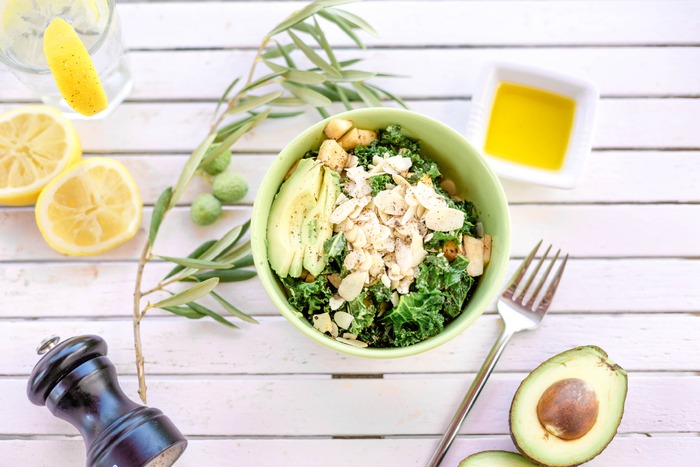
Large salad with mixed greens, roasted pecans, cucumber, cherry tomatoes, pumpkin seeds, grilled chicken or salmon, and olive oil/lemon dressing
Afternoon snack (if needed, for weight management, it is better not to snack):
A small apple with a tablespoon of almond butter or Greek yogurt (plain, full-fat) with a few walnuts
Low Carb, Low GI/GL Dinner:
Baked salmon with roasted broccoli and cauliflower, and a side of lentil soup OR a stir-fry with chicken, mixed vegetables, and a small serving of quinoa
General pattern: Three-quarters of your plate is full of one or more non-starchy vegetables, one quarter as high-quality, lean protein, with a small serving of healthy fat.
Beyond Glycemic Index: Other Dietary Priorities for PCOS
Anti-inflammatory diet emphasis:
The low-GI/GL diet pattern naturally reduces one major source of systemic inflammation (blood glucose dysregulation and insulin). Enhance this by emphasizing omega-3-rich foods (fatty fish, walnuts, flaxseed), polyphenol-rich vegetables and fruits, and extra virgin olive oil.
Meal Timing:
Consuming most of your calories early in the day is best. Studies show that your body produces less insulin for the same foods when eaten in the morning vs. the evening.
Magnesium:
Many women with PCOS are deficient in magnesium. Magnesium is required for insulin receptor function and glucose metabolism. Good dietary sources include dark leafy greens, pumpkin seeds, legumes, and dark chocolate (in moderation). However, due to overfarming, many of these food sources are deficient in magnesium.
Fibre targets:
Aim for at least 25-30g per day. Most Canadian women consume around 15g. Fibre improves your gut microbiome composition, slows glucose absorption, and supports estrogen metabolism through the gut.
Processed food reduction:
Ultra-processed foods are associated with worse insulin sensitivity and systemic inflammation independent of their macronutrient composition. Prioritizing whole foods is more meaningful than obsessing over individual macros.
What a Low GI Diet for PCOS Is Not
A low GI diet for PCOS is not a zero-carbohydrate diet; there really isn’t any such thing other than a very strict carnivore or lion diet. Even broccoli has some amount of carbohydrate. It’s not a ketogenic diet, though some women with PCOS do benefit from an extremely low-carbohydrate approach, particularly those with significant insulin resistance. It is not a rigid meal plan that requires calculating numbers for every food you eat. It’s a framework that prioritizes quality protein at every meal, a low-to-moderate quantity of low-glycemic-index and low-glycemic-load carbs, lots of non-starchy vegetables and food timing to reduce insulin demand while maintaining the nutrient diversity and sustainability required for long-term adherence.
The best diet for PCOS is one that improves your metabolic markers and that you can actually maintain
Dr. Pamela Frank is a naturopathic doctor with 26 years of clinical experience and a background in hospital medical laboratory technology. She uses comprehensive hormone testing to understand each individual’s reason for having PCOS and recommends the right strategies to fix her specific presentation. She practices in Toronto, Ontario, and has a special interest in evidence-based hormonal and metabolic health.
References for the Low GI Diet for PCOS
- Marsh K, Brand-Miller J. The optimal diet for women with polycystic ovary syndrome? Br J Nutr. 2005 Aug;94(2):154-65. doi: 10.1079/bjn20051475. PMID: 16115348.
- Ni C, Jia Q, Ding G, Wu X, Yang M. Low-Glycemic Index Diets as an Intervention in Metabolic Diseases: A Systematic Review and Meta-Analysis. Nutrients. 2022 Jan 12;14(2):307. doi: 10.3390/nu14020307. PMID: 35057488; PMCID: PMC8778967.
- Douglas CC, Gower BA, Darnell BE, Ovalle F, Oster RA, Azziz R. Role of diet in the treatment of polycystic ovary syndrome. Fertil Steril. 2006 Mar;85(3):679-88. doi: 10.1016/j.fertnstert.2005.08.045. PMID: 16500338; PMCID: PMC3752890.
- Wolever TM, Gibbs AL, Chiasson JL, Connelly PW, Josse RG, Leiter LA, Maheux P, Rabasa-Lhoret R, Rodger NW, Ryan EA. Altering source or amount of dietary carbohydrate has acute and chronic effects on postprandial glucose and triglycerides in type 2 diabetes: Canadian trial of Carbohydrates in Diabetes (CCD). Nutr Metab Cardiovasc Dis. 2013 Mar;23(3):227-34. doi: 10.1016/j.numecd.2011.12.011. Epub 2012 Mar 6. PMID: 22397878.


