
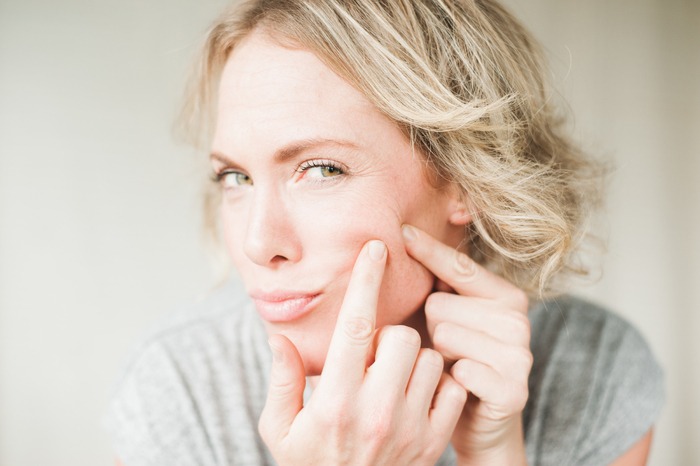
Acne is one of the most common and distressing symptoms of PCOS, affecting approximately 49% of women with the condition. The characteristic PCOS acne location along the chin and jawline is not coincidental: it is a direct expression of androgen excess on the sebaceous glands.
A 2025 meta-analysis including 95 studies confirmed that acne vulgaris has a pooled prevalence of 49% in women with PCOS, making it one of the most frequent comorbidities of the syndrome. In PCOS acne, the chin and jawline are particularly androgen-sensitive areas because the oil-producing (sebaceous) glands in this region have a higher density of androgen (male hormone) receptors.
In PCOS acne, elevated androgens (testosterone, DHT, DHEA-S) overstimulate sebaceous gland activity, increasing sebum (oil) production. Excess sebum clogs pores, promotes the proliferation of Cutibacterium acnes – the bacteria that causes acne – and triggers inflammation, producing the cystic or inflammatory breakouts characteristic of hormonal acne.2
Elevated insulin amplifies this: high insulin levels further stimulate ovarian androgen production and directly stimulate IGF-1 pathways in sebaceous glands, which increase sebum output independent of androgens. This is why PCOS-related acne is typically deep, cystic, and cyclical and why topical skincare alone rarely resolves it.3
How PCOS Acne Differs from Teenage Acne
- Predominantly along the lower face: chin, jawline, and sometimes neck
- Often deeper, cystic, and more painful than surface comedones
- Cyclical pattern, often worse in the week before menstruation
- Persists into the late 20s, 30s, and beyond
- Does not respond well to topical treatments alone2,3
Evidence-Based Treatment Approaches
1. Addressing Insulin and Androgens (Root Cause)
The 2023 International PCOS Guideline recommends combined oral contraceptives as first-line pharmacological treatment for hyperandrogenism, including PCOS acne, in women not seeking pregnancy, with a preference for lower-dose estrogen preparations.4. In naturopathic practice, I use diet modifications to reduce insulin production, lifestyle-based insulin-sensitizing strategies and evidence-based supplementation to address the same root pathway from a non-drug direction.
2. Nutraceutical Evidence for PCOS Acne
A 2024 systematic review (PRISMA-guided, 7 RCTs, 498 participants) of nutraceuticals for PCOS-related acne found:5
- Chromium picolinate: significant reductions in acne severity and inflammatory markers (CRP) in PCOS patients (p<0.05)
- Berberine: positive effects on acne, androgen levels, and insulin resistance in normal/overweight PCOS women with regular menses
- Selenium and antioxidant combinations: showed some benefit for inflammatory skin markers
The 2023 RCT of Berberine Phytosome found acne improvement in 50% of the berberine group versus 16% of controls (p=0.04) at 90 days.6
3. Dietary Pattern
A low-glycemic diet reduces postprandial insulin spikes and has evidence for reducing acne severity. Dairy, particularly skim milk, has been associated with increased IGF-1 and acne severity in some research, though individual responses vary. An anti-inflammatory dietary approach (high in vegetables, omega-3s, and low in carbohydrates) addresses both PCOS acne and the broader PCOS metabolic picture.
4. Topical Support as an Adjunct
Topical agents with evidence supporting their use for hormonal acne include niacinamide (anti-inflammatory, pore-minimizing), azelaic acid (antibacterial and anti-inflammatory, pregnancy-safe), and salicylic acid (comedolytic). These address the skin locally while systemic treatment targets the hormonal driver.2
| Clinical note: The AE-PCOS Society Expert Task Force (2022) recommends that adult female acne should prompt evaluation for androgen excess, and that a full PCOS workup is warranted in any adult woman with persistent inflammatory acne, particularly if it is jawline-predominant, cyclical, or accompanied by other PCOS features. |
| Disclaimer: This is general educational content. Individual treatment should be prescribed by a licensed healthcare provider based on a full clinical assessment. |
| PUBMED REFERENCES |
| 1. Pourahmad B, Majidnia M, Saniee N, Afraie M, Riyahifar S, Darbandi Z. Prevalence of Acne Vulgaris Among Women with Polycystic Ovary Syndrome: A Systematic Review and Meta-Analysis. Med J Islam Repub Iran. 2025 Aug 11;39:105. doi: 10.47176/mjiri.39.105. PMID: 41089626; PMCID: PMC12516454. |
| 2. Carmina E, et al. Female Adult Acne and Androgen Excess: A Report From the Multidisciplinary Androgen Excess and PCOS Committee. J Endocr Soc. 2022. PMC8826298 |
| 3. Shamim, H, et al. Role of Metformin in the Management of PCOS-Associated Acne: A Systematic Review. Cureus. 2022. PMC9511677 |
| 4. Teede HJ, et al. Recommendations from the 2023 International Evidence-Based Guideline for PCOS. Hum Reprod. 2023;38(1):3–19. PMID: 37580314 |
| 5. Nadora, D., et al. Effects of Nutraceutical Supplementation on Acne in PCOS: Systematic Review. J Integr Dermatol. 2024. |
| 6. Di Pierro F, et al. Effect of Berberine Phytosome on reproductive, dermatologic, and metabolic characteristics in women with PCOS. Front Pharmacol. 2023;14:1269605. PMC10703476 |


